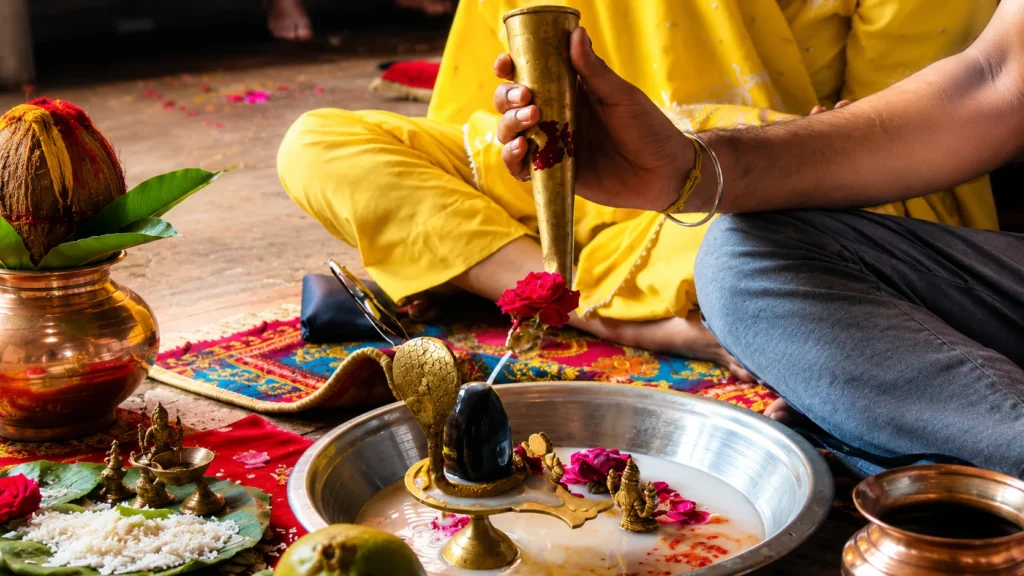
Rudrabhishek Puja is a sacred Vedic ritual dedicated to Lord Shiva, in which the Shiva Lingam is ceremonially bathed with sacred substances while powerful Vedic mantras, especially the Rudra Mantra and Shri Rudram, are chanted. The word Abhishek means a ceremonial offering or bathing, while Rudra is a revered name of Lord Shiva.
Rudrabhishek Pooja is traditionally performed with devotion and a Sankalp (sacred intention) for peace, prosperity, protection, health, spiritual strength, and the removal of obstacles. Depending on the tradition and purpose, the Abhishek may involve water, milk, curd, honey, ghee, sugar, Bilva leaves, flowers, and other sacred offerings.
The ritual generally includes Ganesh Puja, Sankalp, Shiva Puja, Rudra Mantra chanting, Abhishek, offerings, and Aarti. The exact procedure and materials may vary according to the tradition followed by the Panditji.
According to traditional Hindu beliefs, performing Rudrabhishek Puja with faith and proper Vedic procedures may help devotees seek:
Devotees often perform Rudrabhishek Pooja during difficult or uncertain periods of life or when they wish to begin an important phase with the blessings of Lord Shiva.
After completing the ritual, devotees traditionally seek a greater sense of peace, positivity, confidence, and spiritual reassurance. The chanting of Rudra Mantras and the Abhishek of the Shiva Lingam are considered deeply purifying practices that can help create an atmosphere of devotion and inner calm.
Many devotees experience the ritual as an opportunity to release worries, strengthen their faith, and seek divine guidance for the challenges ahead.
The experience can naturally differ from person to person. Rudrabhishek Puja is a traditional spiritual and devotional practice and should not be considered a guaranteed solution to health, financial, career, relationship, or other personal problems.
Ujjain holds a special place in Shaivite tradition and is home to Mahakaleshwar Jyotirlinga, making it an important pilgrimage destination for devotees of Lord Shiva. Performing Rudrabhishek Puja in Ujjain allows devotees to undertake this sacred ritual in a spiritually significant environment under the guidance of experienced Panditjis.
Whether performed for peace, prosperity, protection, spiritual growth, or a specific Sankalp, Rudrabhishek Puja is traditionally undertaken with श्रद्धा (faith) and devotion while seeking the blessings of Lord Shiva for a peaceful, positive, and spiritually enriched life.
We take care of your complete puja arrangements with experienced pandits, authentic rituals, puja samagri, and personalized guidance for a peaceful spiritual experience.

Expertise

Personalized

Complete

Authentic

Hassle-Free
Perform authentic Vedic rituals with experienced Pandits, complete puja samagri, and personalized guidance.


Choose what works best for you. Attend the puja personally in Ujjain or participate online from anywhere through Zoom or WhatsApp.
Our experienced Pandits perform every puja with proper Vedic rituals, traditional mantras, and sincere devotion.
Not sure which puja is right for you? Speak with our Panditji before booking and get guidance based on your requirements.
We take care of the essential puja samagri, arrangements, setup, and mantra chanting, so you can focus on your prayers.
Your puja can be performed with your name and gotra, making the sankalp personal and specific to your spiritual intention.
From booking to puja completion, we keep the process straightforward with clear communication and no unnecessary complications.
Whether you are in India or living abroad, Ujjain Tour Advisor helps you connect with authentic puja services in Ujjain, even when you cannot be here personally.
FAQ
Rudrabhishek Puja is a sacred Vedic ritual dedicated to Lord Shiva in which the Shiva Lingam is ceremonially bathed with sacred offerings while Rudra Mantras and Vedic prayers are chanted.
Rudrabhishek Pooja is traditionally performed to seek Lord Shiva’s blessings for peace, prosperity, protection, spiritual strength, and removal of obstacles.
According to traditional beliefs, the puja may help devotees seek mental peace, positivity, spiritual purification, family harmony, protection from negative influences, prosperity, and strength during challenging phases of life.
Depending on the ritual procedure, offerings may include water, milk, curd, honey, ghee, sugar, Bilva leaves, flowers, fruits, and other sacred items. The exact samagri may vary according to the tradition followed.
Lord Shiva is the primary deity worshipped during Rudrabhishek. The ritual focuses on the ceremonial Abhishek of the Shiva Lingam along with the chanting of sacred Shiva and Rudra Mantras.
Yes. Devotees can perform Rudrabhishek Puja to seek the blessings of Lord Shiva. The specific procedure may depend on the devotee’s Sankalp and the tradition followed by the Panditji.
Yes. A Sankalp can traditionally be taken for the well-being, peace, prosperity, and protection of a family member or the entire family.
Yes. Unmarried devotees can perform Rudrabhishek to seek Lord Shiva’s blessings for peace, personal growth, spiritual strength, and other sincere intentions.
Yes. Married couples can participate together in Rudrabhishek Pooja and take a joint Sankalp according to the prescribed ritual procedure.
Rudrabhishek can be performed at home, a temple, or other sacred places. Ujjain is an especially significant destination for Shiva devotees because of the presence of Mahakaleshwar Jyotirlinga.
Yes. Rudrabhishek Puja in Ujjain can be arranged with experienced Panditjis who conduct the Abhishek, mantra chanting, and associated rituals according to traditional Vedic procedures.
The duration depends on the type of Rudrabhishek, number of mantras, and rituals included. The Panditji can provide the expected duration based on the selected puja procedure.
The required puja samagri can generally be arranged by the puja organizer. Devotees may need to provide basic details such as their name and Gotra for the Sankalp.
Depending on the service provider, devotees may be able to participate remotely while the Panditji performs the Rudrabhishek Pooja on their behalf.
Devotees traditionally seek mental peace, emotional calm, positivity, spiritual strength, and relief from worries and obstacles after completing the puja. Individual experiences naturally vary.
According to traditional beliefs, devotees perform Rudrabhishek to seek Lord Shiva’s blessings for the removal of perceived obstacles and smoother progress in important areas of life.
Yes. Devotees may perform the puja with a Sankalp for prosperity, stability, abundance, and positive progress. However, the ritual should not be considered a guaranteed financial solution.
The specific mantras depend on the type of ritual. Rudra Mantras, Shri Rudram, Shiva Mantras, and other Vedic prayers may be included as prescribed by the Panditji.
The suitable date and time can depend on the purpose of the puja and the tradition being followed. A Panditji can suggest an appropriate Muhurat. Rudrabhishek is also commonly associated with auspicious days dedicated to Lord Shiva.
No. Rudrabhishek Puja is a traditional spiritual and devotional practice and cannot guarantee the removal of health, financial, career, relationship, or other personal problems. It is performed to seek divine blessings, peace, strength, and spiritual well-being.
© 2026 Created with Digital Upway